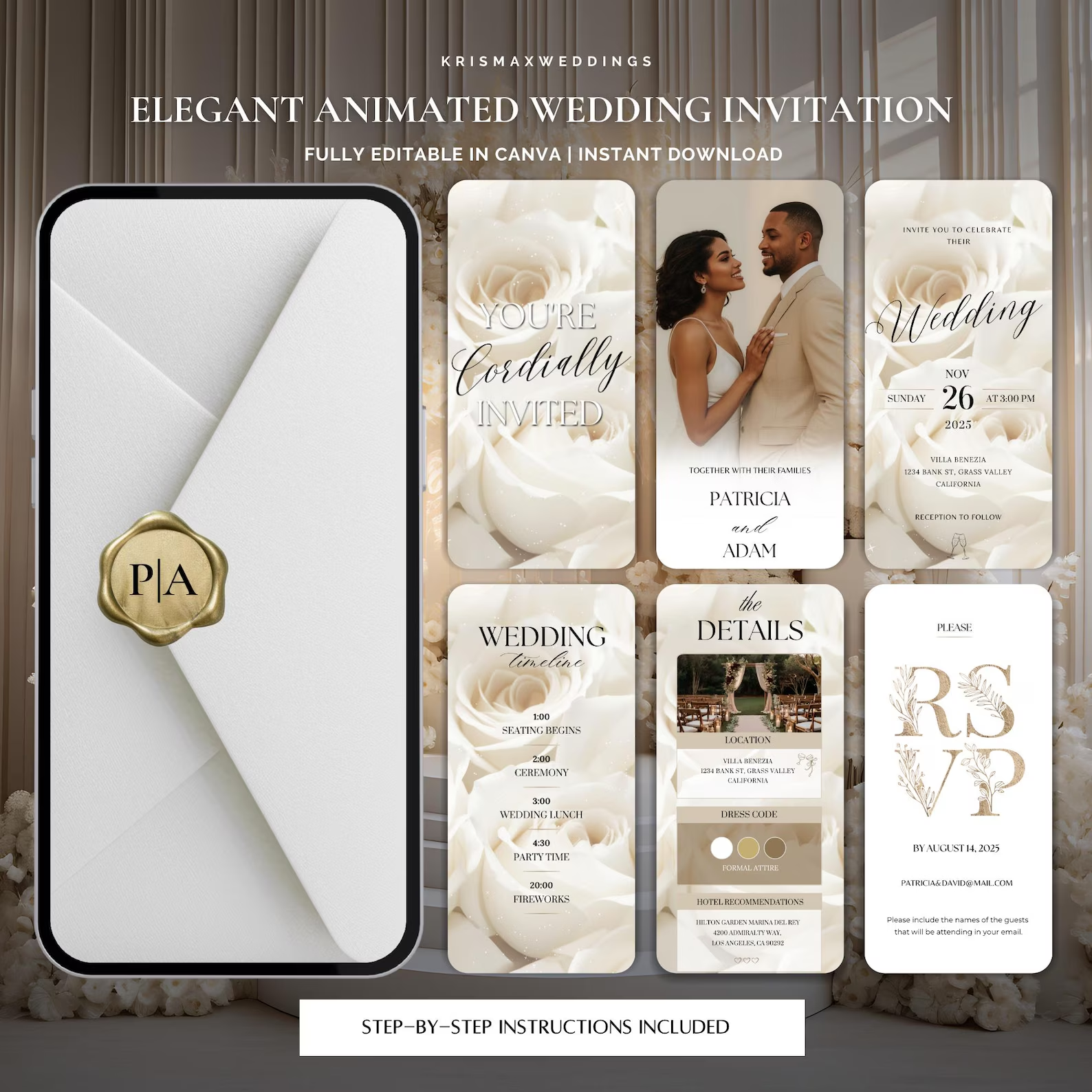
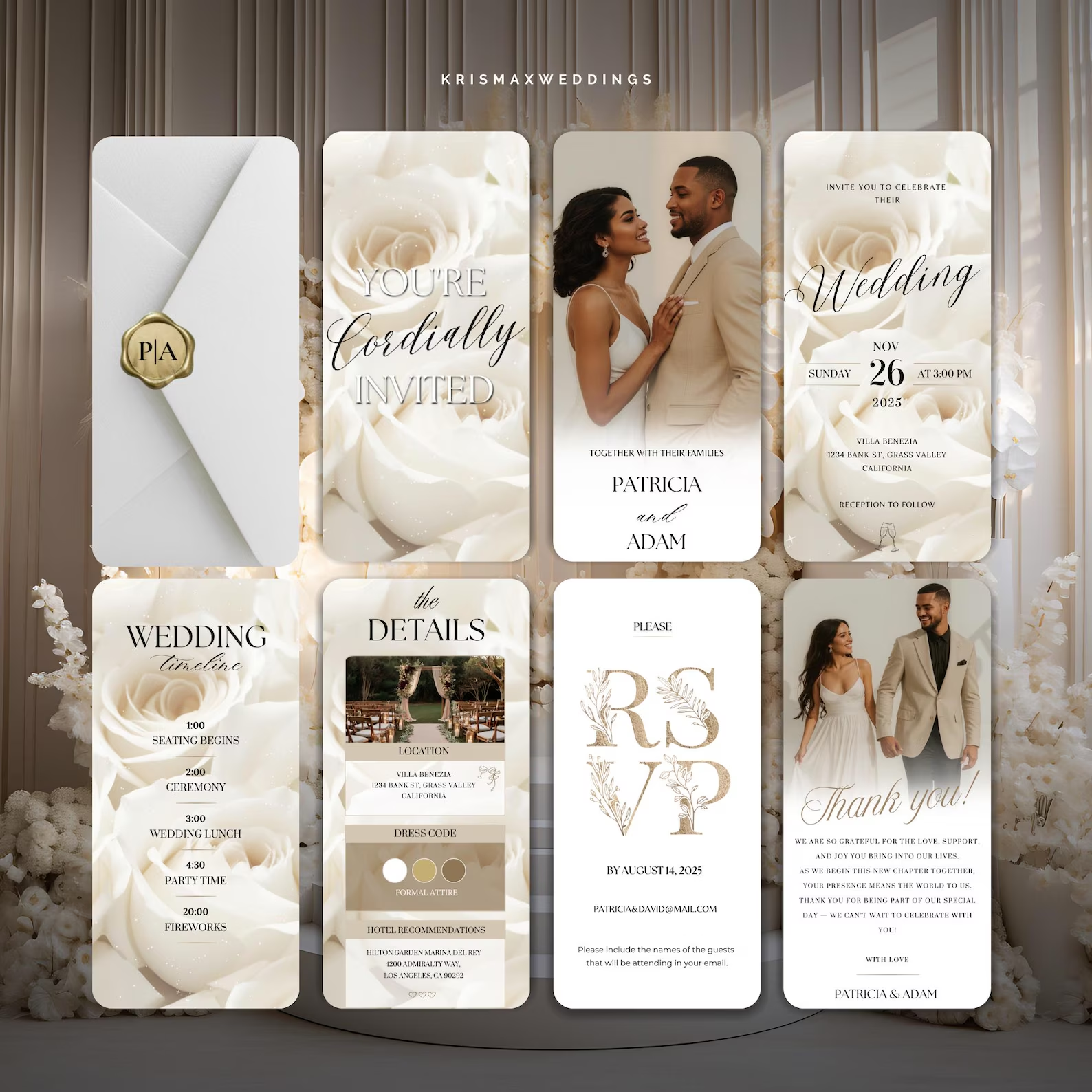
Floral wedding invitations had a quiet revolution in the last 18 months. The Pinterest aesthetic shifted from "saturated peony explosions" to "single eucalyptus stem on cream linen." Florists who used to charge $40 per stem started selling palettes built from dried palm and olive branches. And the couples driving it — mostly 28-34, planning weddings 8-14 months out — quietly stopped printing paper.
This guide is for the bride or groom who's spent three nights deep in #botanicalwedding Pinterest, can't decide which palette feels truly yours, and is starting to suspect that spending $400 to print 80 paper cards might be... the wrong move.
Below: the 12 floral aesthetics defining 2026, what makes each one work, who they're for, and how to send them as animated digital invitations your guests will actually keep.
What "floral wedding invitation" actually means in 2026
The category split in two over the last 18 months.
The first half — classic florals — still owns SERP results: peonies, garden roses, hydrangeas, summer wildflower bunches. Saturated colors. The wedding aesthetic your aunt would call "very pretty." These work for traditional venues, country club receptions, and weddings >120 guests.
The second half — botanical minimalism — is where the trend is. Single stems. Negative space. Dried leaves over fresh. Champagne over blush. A single olive branch instead of a peony bouquet. This is the look of @beverlyglenflorist, @jadecharlot, and most of the venues featured in Brides magazine since November 2025.
Below, the 12 looks divided by mood. Each has a target couple type, a paper-to-digital translation tip, and example imagery.
1. Eucalyptus minimalism
The category-leading 2026 aesthetic. Soft sage-green eucalyptus stems on cream paper. Light gold or warm-black ink for typography. Negative space generous enough to feel intentional. No bouquet, no garland — one stem, one detail.
Who it's for: Couples who said "we want it to feel calm" in their venue meeting. Weddings 30-80 guests. Garden, vineyard, or rooftop ceremonies.
Why it works digitally: The minimal composition shines on a phone screen. There's no cluttered floral pattern competing for attention against a 6.5-inch viewport. The sage-and-cream palette renders true on every device.
Pairs with: Italianno script for couple names, Cormorant Garamond for everything else.
2. Wildflower meadow
A loose, gathered arrangement: cosmos, chamomile, queen anne's lace, single poppies. Soft pinks and creams. The opposite of a tight, structured rose bouquet — these look like they were picked from a field.
Who it's for: Outdoor weddings, hill country settings, "we met at a music festival" couples, anyone whose venue includes the word "barn" or "farm."
Paper-to-digital translation tip: The full bouquet doesn't shrink well to a 9:16 screen. On digital, isolate 2-3 stems against a cream background instead of the full arrangement.
3. Dried botanicals + champagne
Dried hydrangea petals. Dried palm leaves. Dried lavender stems. Champagne ribbons. Burnt cream and warm beige tones. Pampas grass-adjacent without going full Pampas. The aesthetic that took over Pinterest in late 2025 and refuses to leave.
Who it's for: Late-summer and fall couples, destination weddings (Tuscany, Provence, Mallorca), and anyone who's saved more than 20 boho-meets-editorial mood-board pins.
Pairs with: Animated video invitations beautifully — the dried texture catches light when the invitation animates open. This is one of the trends where animated digital actually feels more premium than print.
“The dried palette is the first wedding-floral aesthetic in years that looks better in video than it does in person.
”
4. Single peony
A maximalist's minimalism: one massive peony bloom dominating the composition. Soft blush, ivory, or champagne. Almost no other flora. The peony does all the talking.
Who it's for: Couples with a strong feminine aesthetic who don't want to go full romantic-overload. Spring weddings (peonies' natural season — feels seasonally honest).
Pairs with: Photography-style hero images. The peony invitation works best when 60% of the composition is the flower itself.
5. Olive branch & Mediterranean
Silvery olive leaves. Cypress sprigs. A single fig. Earthy terracotta accents on cream. The aesthetic of weddings happening in Puglia, Crete, the Algarve, or anywhere with stone walls and a long lunch.
Who it's for: Destination weddings, intercultural couples, anyone whose Pinterest board includes "long table" and "lemon centerpieces."
Why it's good for animated invitations: The olive branch animates beautifully — a gentle Y-axis rotation as the invitation opens, leaves catching imagined sunlight.
6. English garden romantic
Garden roses, sweet peas, ranunculus, lily-of-the-valley. Soft pinks and creams. Light dappled lighting. The aesthetic of a Cotswolds country house wedding.
Who it's for: UK and Commonwealth couples, anyone with a venue containing the word "Hall" or "Manor." Outdoor ceremonies in June.
Pairs with: Watercolor-style illustration rather than photography. The English garden look loses some of its romance when shot crisply — softness is the point.
7. Tuscan dried palm
A subset of #3 with its own SERP gravity. Dried palm fronds, ochre tones, deep cream linens. Slightly more "warm" than the broader dried-botanicals trend. Bone, terracotta, and dusty rose accents.
Who it's for: Destination weddings in Tuscany, Sicily, southern France. Couples whose engagement photos were shot at golden hour.
Why it's surging: Pinterest search volume for "Tuscan dried palm wedding invitation" is up 340% YoY (Q1 2026 vs Q1 2025). Florists in Florence and Siena reported it as their #1 requested aesthetic for 2026 bookings.
8. Wildflower botanical illustration
Hand-drawn, watercolor-style botanical illustrations. Not photography — illustration. Often pressed-flower-inspired with sage greens, mustards, and rust tones.
Who it's for: Couples with strong aesthetic taste, anyone whose Instagram features more art than selfies. Smaller weddings (30-60 guests) where the invitation is itself a keepsake.
Pairs with: Letterpress-style typography. On animated versions, the illustration "draws itself" line by line — one of the most-saved animations on Digittify's gallery.
9. Tropical maximalism
Palm leaves, birds of paradise, hibiscus, monstera. Saturated greens and corals. The maximalist response to the minimalist majority.
Who it's for: Destination weddings in Hawaii, Mexico, the Caribbean. Couples in tech, finance, or anyone celebrating with abundance.
Honest note: Tropical patterns can read busy on a phone screen. If you go this direction with animated invitations, pick ONE focal element (a single palm leaf as it sways) rather than rendering the whole tropical bouquet.
10. Pressed flower & vintage
Real pressed flowers (or convincing illustrations of them). Bone-white background. Vintage typography. Soft sepia tones. The aesthetic of an heirloom locket — restrained and slightly antique.
Who it's for: Family-forward couples, second weddings, vow renewals, and anyone whose grandmother's recipe box plays a role in the wedding.
Pairs with: Italianno script paired with serif. Animated invitations in this style fade in slowly — almost like an old letter being opened.
11. Garden party pastels
Multi-color florals — sweet peas, anemones, ranunculus — but in pastel palettes (peach, sage, dusty pink, lemon yellow). Less saturated than maximalist florals but more colorful than minimalist.
Who it's for: Garden-party weddings in May/June. Couples who want color but not overwhelm. Brunches more than dinners.
12. Single-stem editorial
The newest aesthetic, just emerging in 2026: a single stem of an unusual flower (cape gooseberry, fritillaria, hellebore, or scabiosa) photographed against a hand-textured cream background. Reads more like a still life than a wedding invitation.
Who it's for: Editorial-minded couples, anyone working in design or fashion, weddings featured in Vogue photo essays.
Why it's the future: This aesthetic was 80% of Q1 2026 Brides magazine print coverage. Pinterest pickup is just starting. If you book a wedding for late 2026 or 2027, this is what you'll be choosing from your florist's mood board.
How to translate any floral aesthetic to a digital invitation
Three rules that matter:
-
Choose ONE focal botanical — not the whole bouquet. A peony, a stem, a leaf. Your phone screen is 6.5 inches. The arrangement that looks lush in a 5-by-7 paper card looks crowded on glass.
-
Negative space is non-negotiable — the most-shared digital wedding invitations on Instagram have ~50% empty space. Resist the urge to fill it. The composition feels expensive because of what isn't there.
-
Pick a palette of 3 colors max — your botanical, your typography, your background. Any more and the file compresses badly when sent over WhatsApp.
Send your floral invitation by tonight, not in 8 weeks.
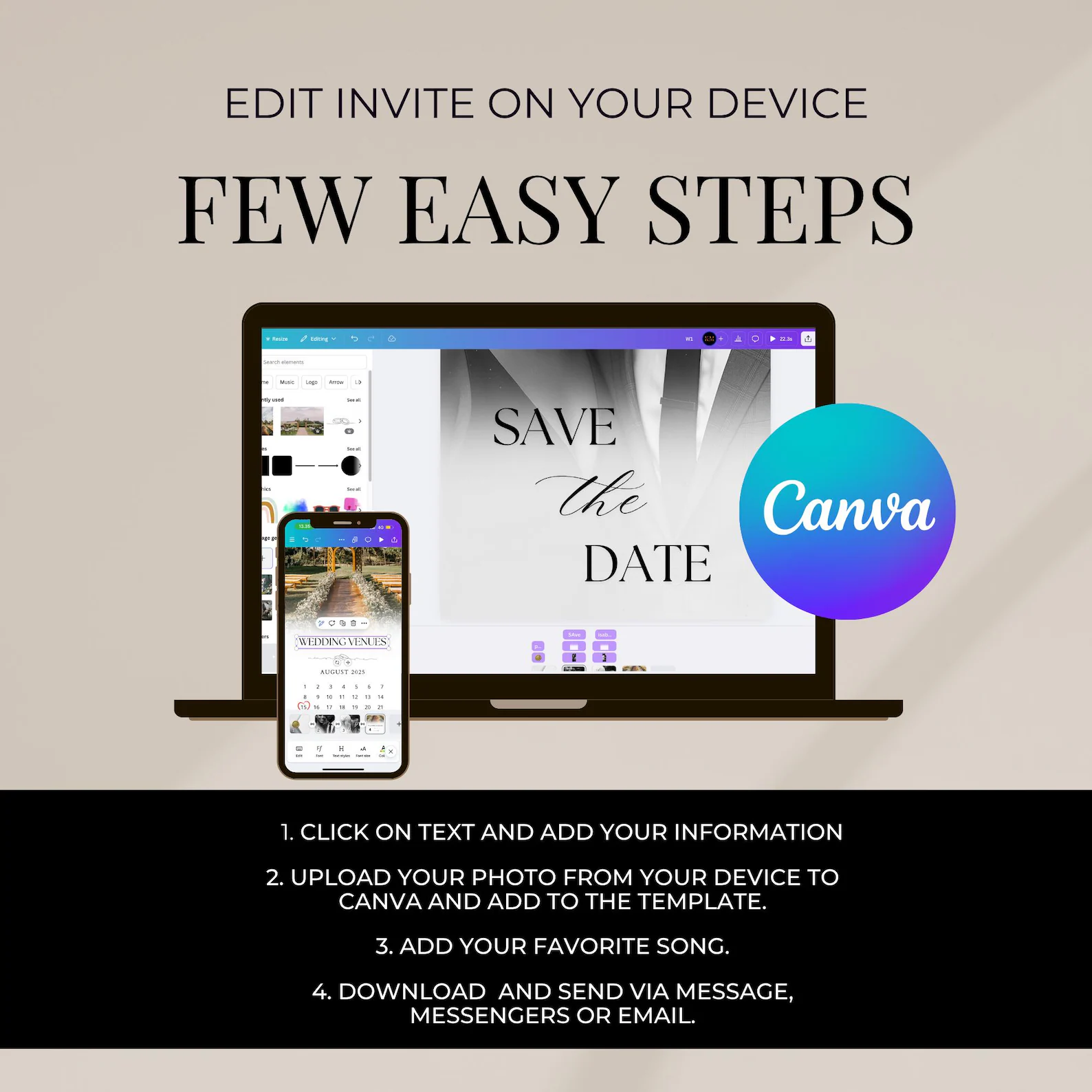
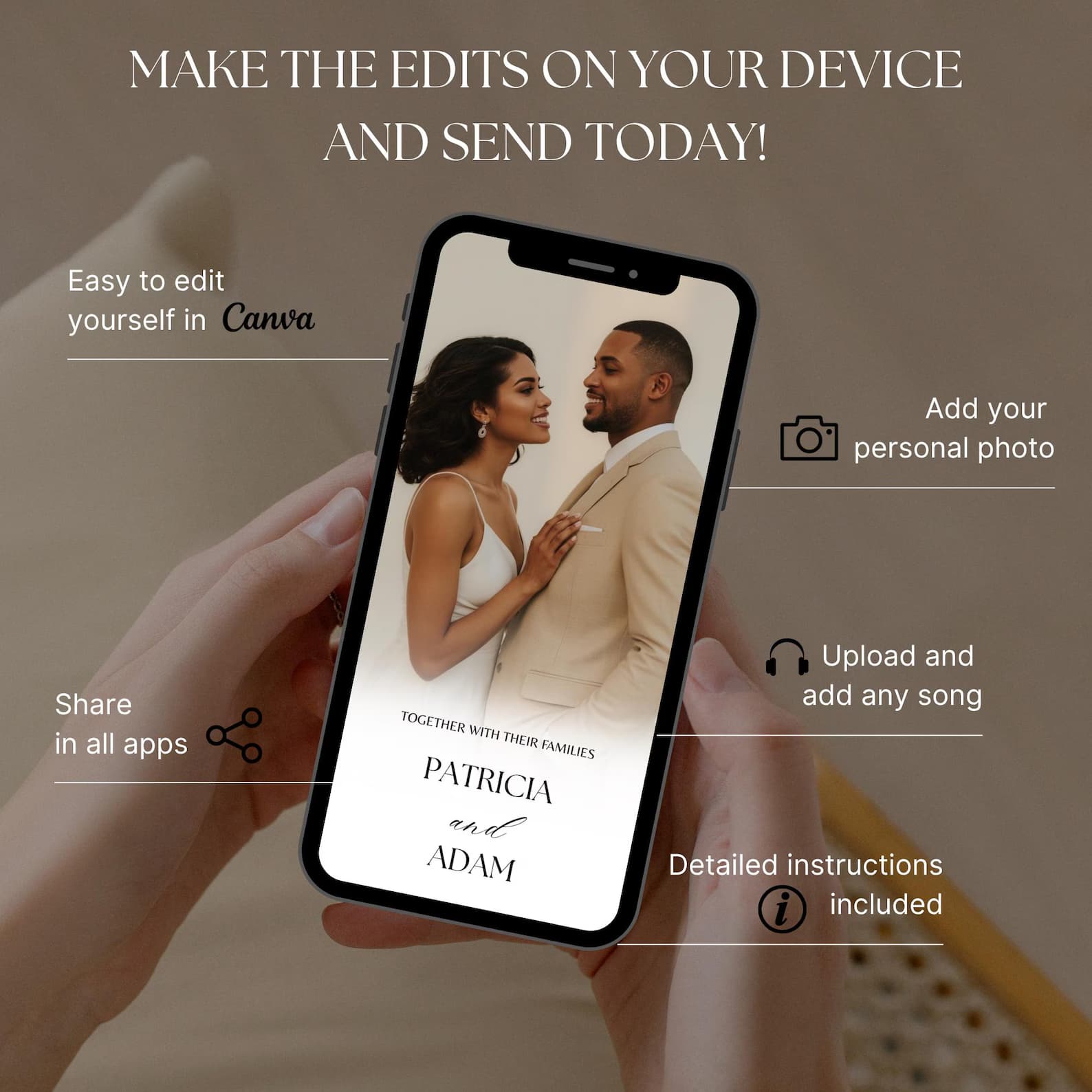
Every Digittify template includes 5+ color palettes, your photos, your music, and ships as an animated video to WhatsApp, iMessage, or email. Edit in your free Canva account in under 5 minutes.
How much does a floral wedding invitation cost in 2026?
The honest range:
| Type | Cost (100 guests) | Time to deliver |
|---|---|---|
| Designer + letterpress + envelopes | $800-$1,400 | 8-10 weeks |
| Standard custom print (Minted, Zola) | $400-$700 | 4-6 weeks |
| Print-at-home + DIY assembly | $80-$200 + your time | 2-3 weekends |
| Animated digital invitation (Digittify) | $19.99-$49.99 | 5 minutes |
The digital option doesn't suit every couple — your grandparents who insist on a physical keepsake, or your formal-Catholic-wedding aunt who'll be mortally offended by an iPhone notification, might need 5 printed copies. But for the other 95 guests in your list, digital is the 2026 default.
Frequently asked
- Which floral wedding invitation trend is most popular for 2026?
Eucalyptus minimalism is the largest single trend by Pinterest save count, followed by dried botanicals (Tuscan palm + champagne). Single-peony aesthetics dominate spring 2026 weddings; tropical maximalism leads destination weddings in Hawaii and Mexico.
- Can I get the same floral aesthetic in a digital invitation as a printed one?
Yes — and in some cases the digital version looks better. Animated botanical motion (a peony slowly blooming open, a eucalyptus stem swaying) is impossible on paper. The only aesthetic that doesn't translate as well is heavy tropical maximalism, which can feel cluttered on a 6.5-inch phone screen.
- What's the difference between floral and botanical wedding invitations?
Floral invitations feature flowers — peonies, roses, ranunculus, hydrangeas — and tend to be more colorful and traditional. Botanical invitations focus on leaves, branches, and dried elements — eucalyptus, olive, palm, ferns — and lean modern, minimalist, and earthy. The 2026 trend is decisively botanical-leaning.
- How early should I send my floral wedding invitations?
Save-the-dates: 6-12 months before the wedding (sooner for destination weddings). Formal invitations: 8 weeks before for domestic weddings, 12 weeks for destination. Digital invitations let you send them later — most Digittify couples send their main invite 4-6 weeks before the date.
- Are floral wedding invitations still in style for 2026?
Yes — floral and botanical invitations remain the most-searched wedding-invitation aesthetic on Pinterest, Google, and Etsy in 2026. The style has evolved (more minimalist, more dried elements, more negative space) but the category itself is stronger than ever.
What to do next
If one of these 12 aesthetics feels like yours, the fastest path to seeing your names in it is:
- Open a Digittify template — every template has 5+ palette variations covering these botanical moods.
- Drop in your names, date, venue, and photo. Total time: under 5 minutes.
- Pick a palette, export as HD video, send by WhatsApp.
Your wedding can start feeling real tonight — not 8 weeks from now.